 Drying Technology

Working Mechanism:
Grain materials enter the dryer from the top and undergo indirect heat exchange with the heating medium through the built-in heat transfer tube bundle. The heat is evenly transferred to the material side, rapidly driving water evaporation. The moisture-laden gas formed by evaporation then flows back to the heat pump unit. After dehumidification, the circulating air is heated and transformed into hot air again, entering a closed cycle of "heating-dehumidification" (without emitting waste heat to the outside). Simultaneously, the system is equipped with a pulse dust removal device to efficiently handle impurities, floating debris, and dust generated during the drying process. By optimizing airflow organization, dust spillage is reduced, achieving a low-pollution production environment.
SCHEMATIC DIAGRAM
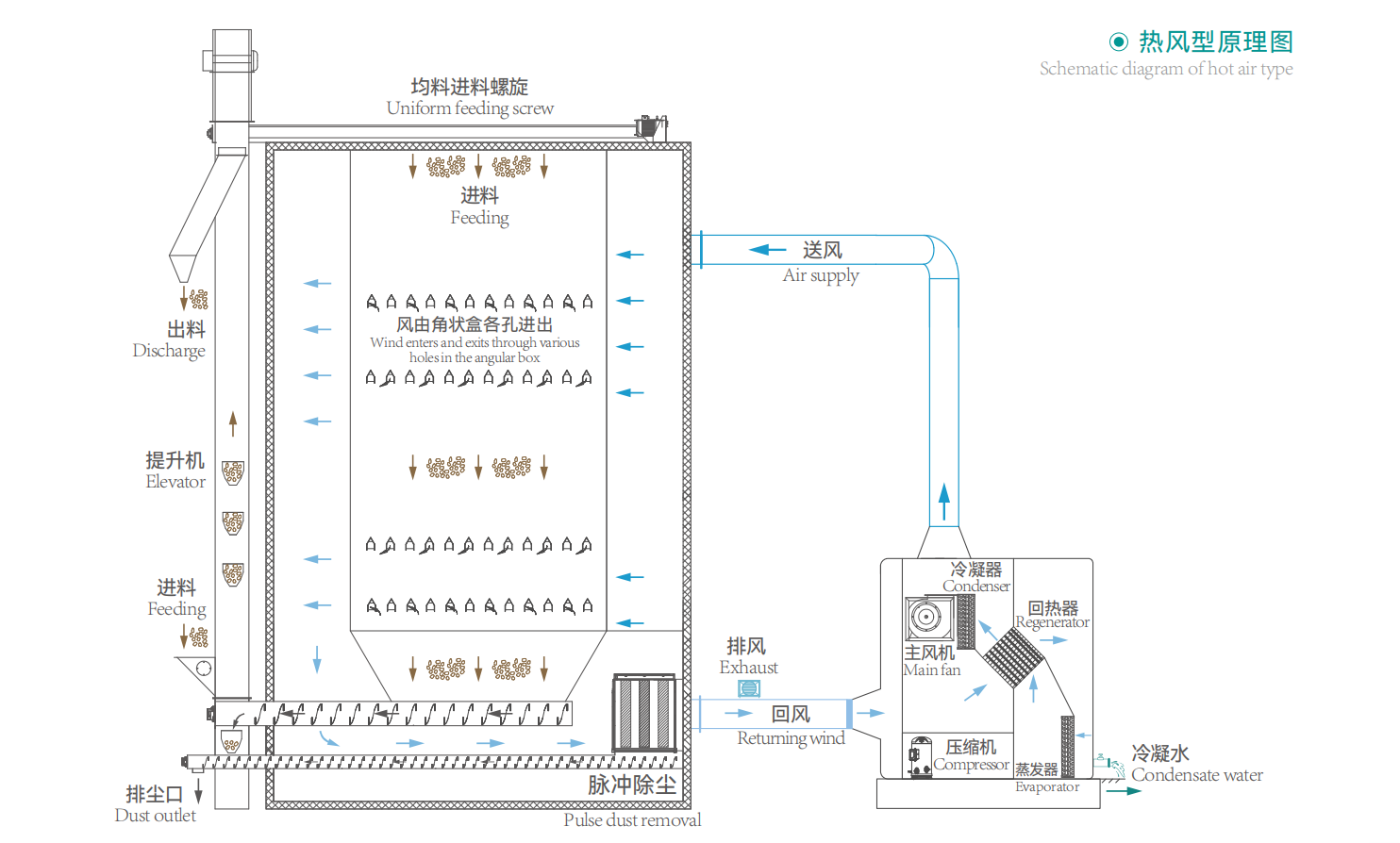
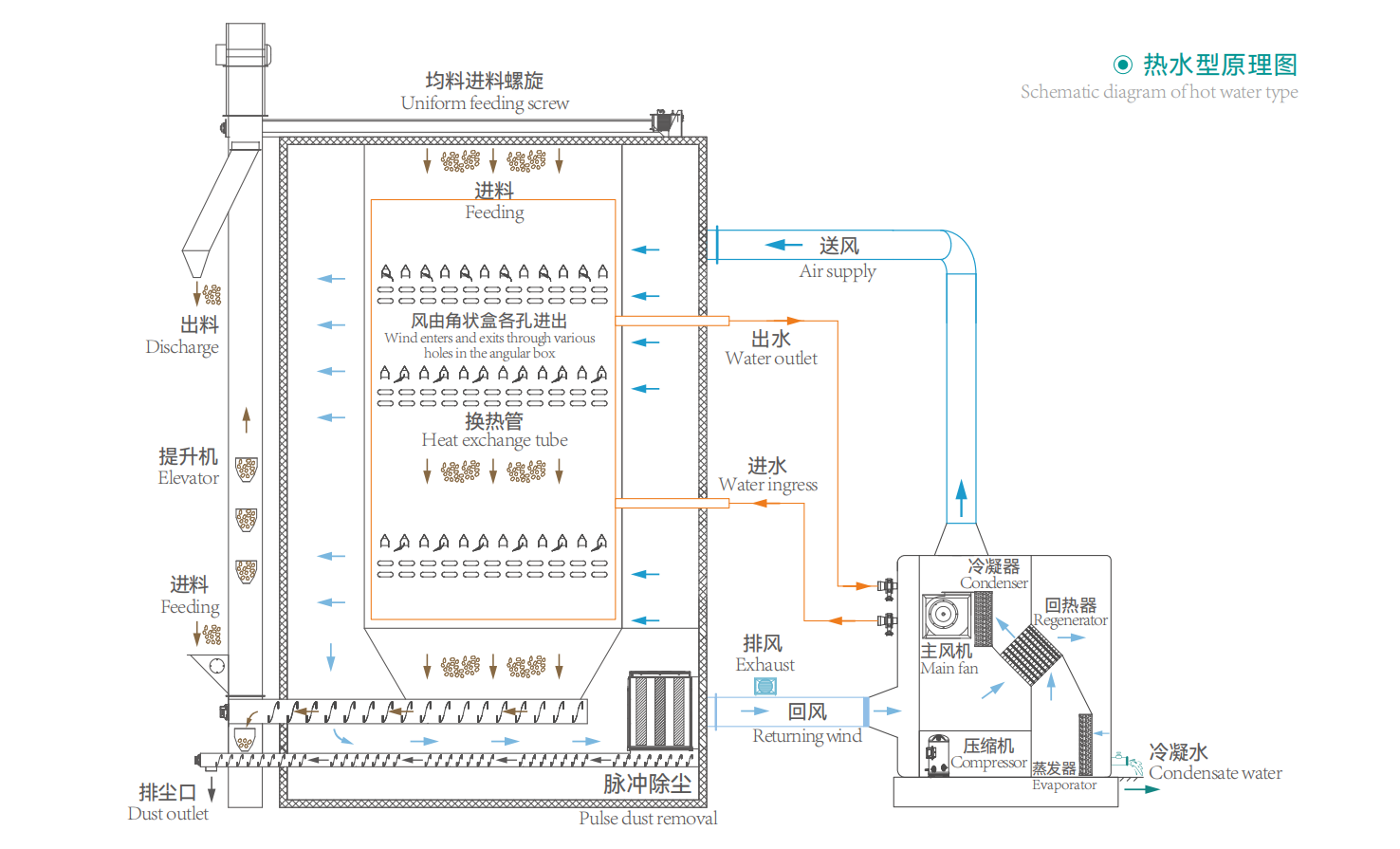
When functioning as a heating and cooling device, heat or cold is transferred indirectly to the material through a heat-carrying or cold-carrying medium, without direct contact between the air and the material, thus reducing dust and gas emissions.
The carrier gas can be air or other inert gases.
Utilizing a heat pump for energy recovery, achieving high-quality drying of grain, and economical and efficient utilization of thermal energy, this system eliminates emissions of CO2, SO2, NO2, and slag due to the absence of any oxidative combustion processes. It achieves significant energy savings and environmental protection effects; the air is preheated, enhancing its moisture-carrying capacity.
Using low-temperature grain drying at 40~55 degrees Celsius, compared to traditional high-temperature drying, the brown rice yield is increased by more than 3%, improving the quality of the drying process.
It can be used for dehumidification and drying at temperatures below 40 degrees Celsius, making it suitable for seed drying.
Fully automatic intelligent control, continuous or intermittent discharge, with low material crushing rate and no wear and tear.
The unit is designed with a fully enclosed structure and utilizes condensation dehumidification technology, achieving energy savings of over 40%.
Using a heat pump as the heat source can eliminate the need for transportation and storage of fossil fuels, eliminate combustion and open flames, significantly reduce risks, and provide intelligent protection and control, ensuring the safety and reliability of the unit.
It has a wide range of adaptability, long service life, and reduces overall costs.
Modular assembly, easy to install.